Challenge
Start with an assumption the audience may have stopped questioning.
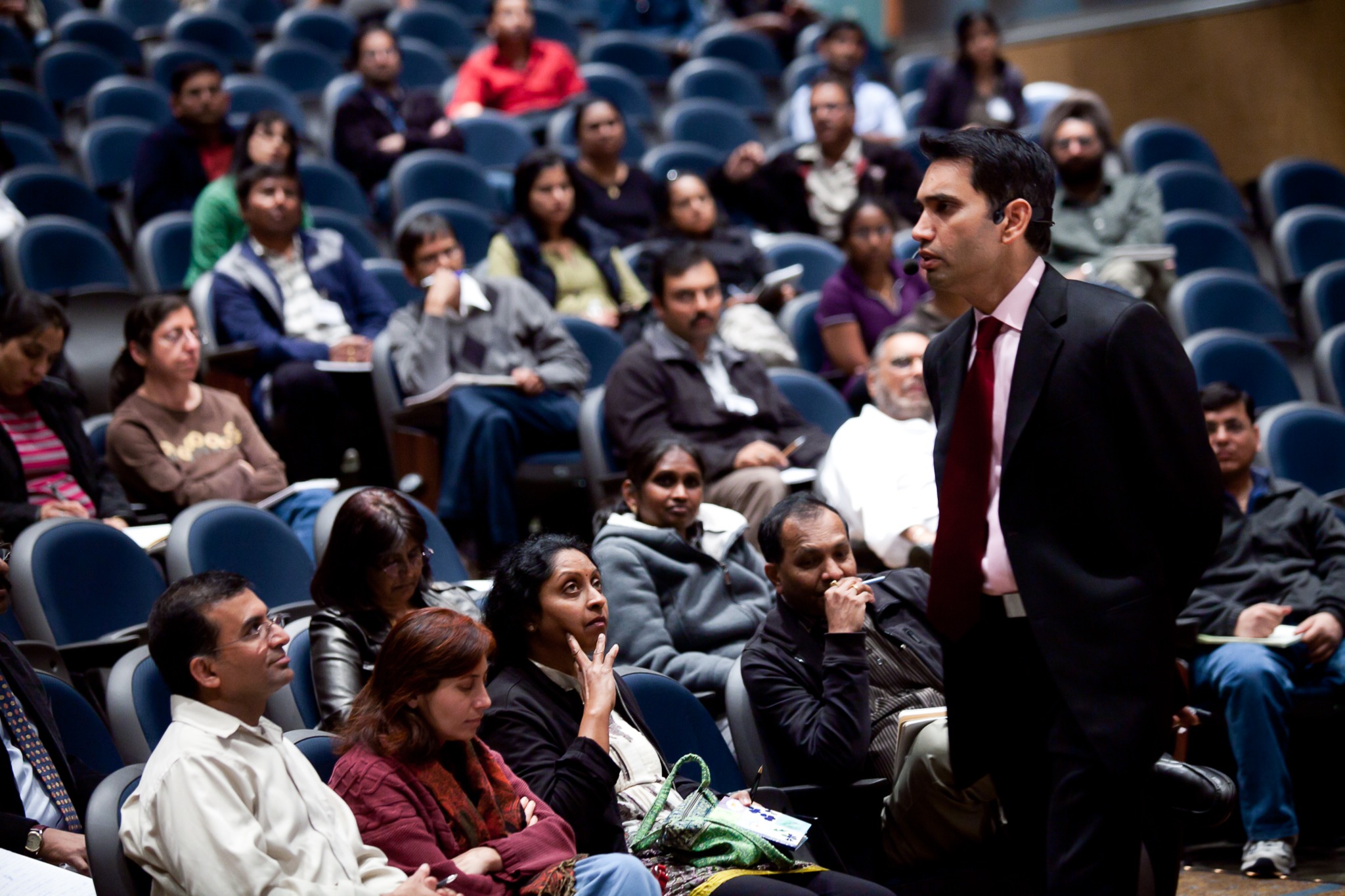
Srini speaks to audiences about human change, performance, identity, influence, AI and the decisions that shape what happens next.
His goal is not simply to make people feel something. It is to make them see something differently enough that the conversation continues after the session ends.
If an audience leaves seeing the problem exactly the same way they saw it when they arrived, the energy usually has nowhere to go.
Srini wants people to question something they believed was settled. A definition of success. A story about who they are. A behavior they have mistaken for personality. An assumption about what is still possible.
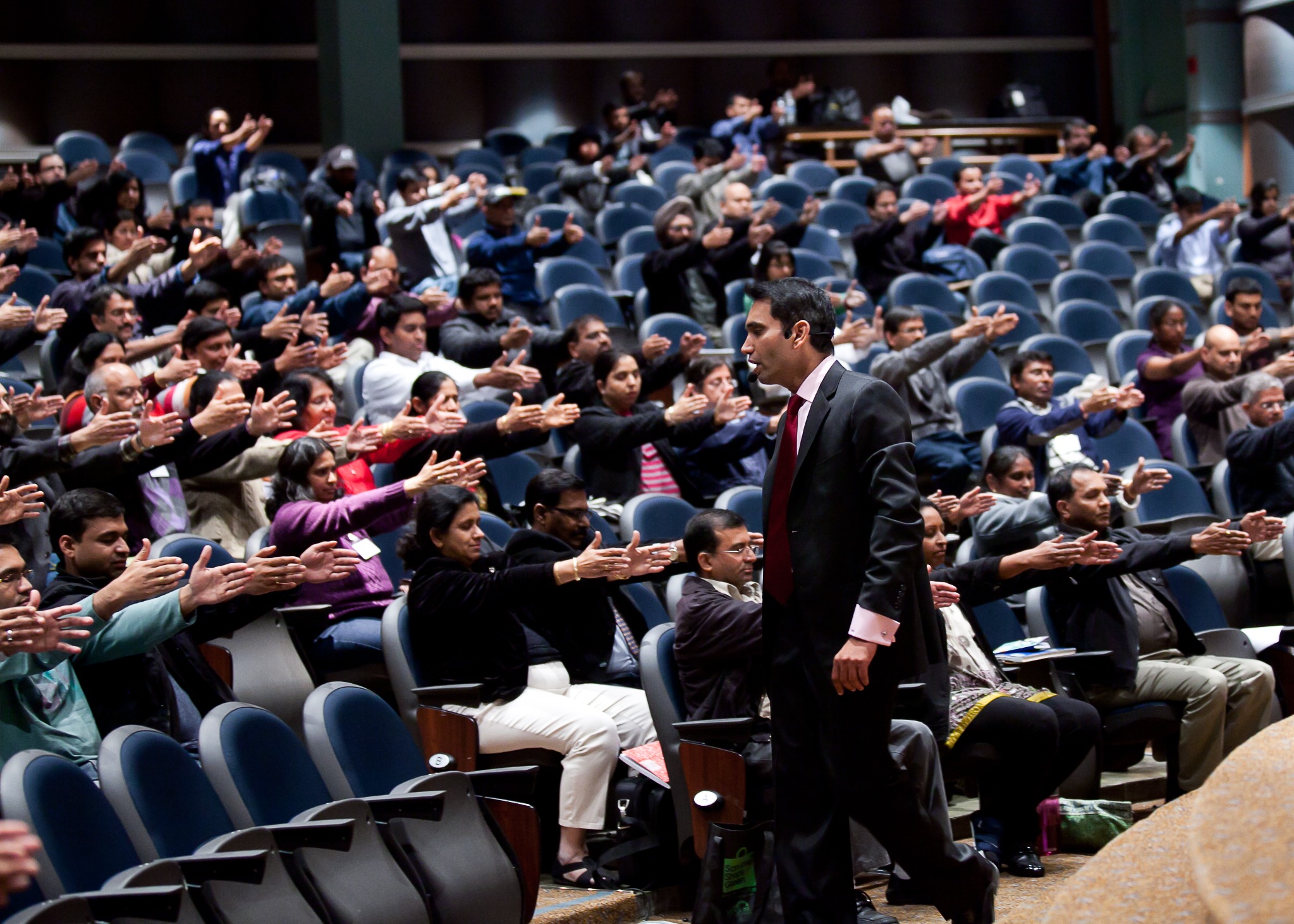
Participation changes the relationship to an idea. People stop watching a speaker demonstrate a point and begin experiencing the point for themselves. Srini uses questions, demonstrations and live interaction to make the room part of the work.
Start with an assumption the audience may have stopped questioning.
Make the idea visible through demonstration, interaction and participation.
Help people see where the idea is already operating in their own decisions and behavior.
Give them something concrete to examine after the applause stops.
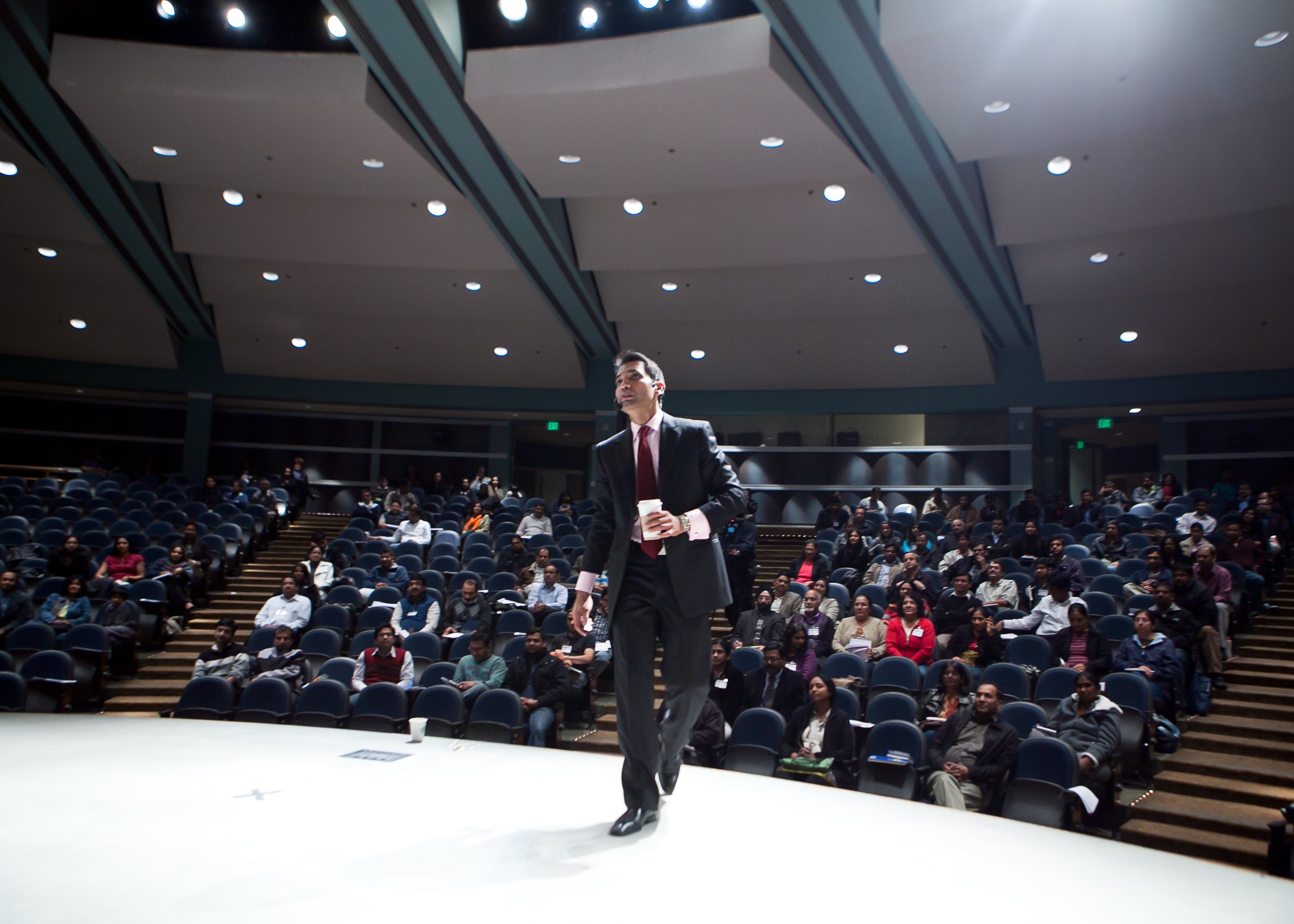
The audience may be hundreds of people. The useful moment is often the one where a person feels the question was somehow meant for them. Srini works to keep that sense of personal relevance even in a large room.

Why capable people can know what needs to change and still keep reproducing the same result.
What happens when the definition that helped you succeed becomes the definition that limits what you can choose next.
How language, attention and assumptions shape what people hear, believe and do.
Lessons from building, selling, communicating and adapting in environments where uncertainty is part of the job.
AI is changing more than tools. It is changing how people think about expertise, value, career identity, judgment and what work still belongs uniquely to humans. Srini helps audiences examine how to adapt without surrendering clarity, agency or the ability to think for themselves.
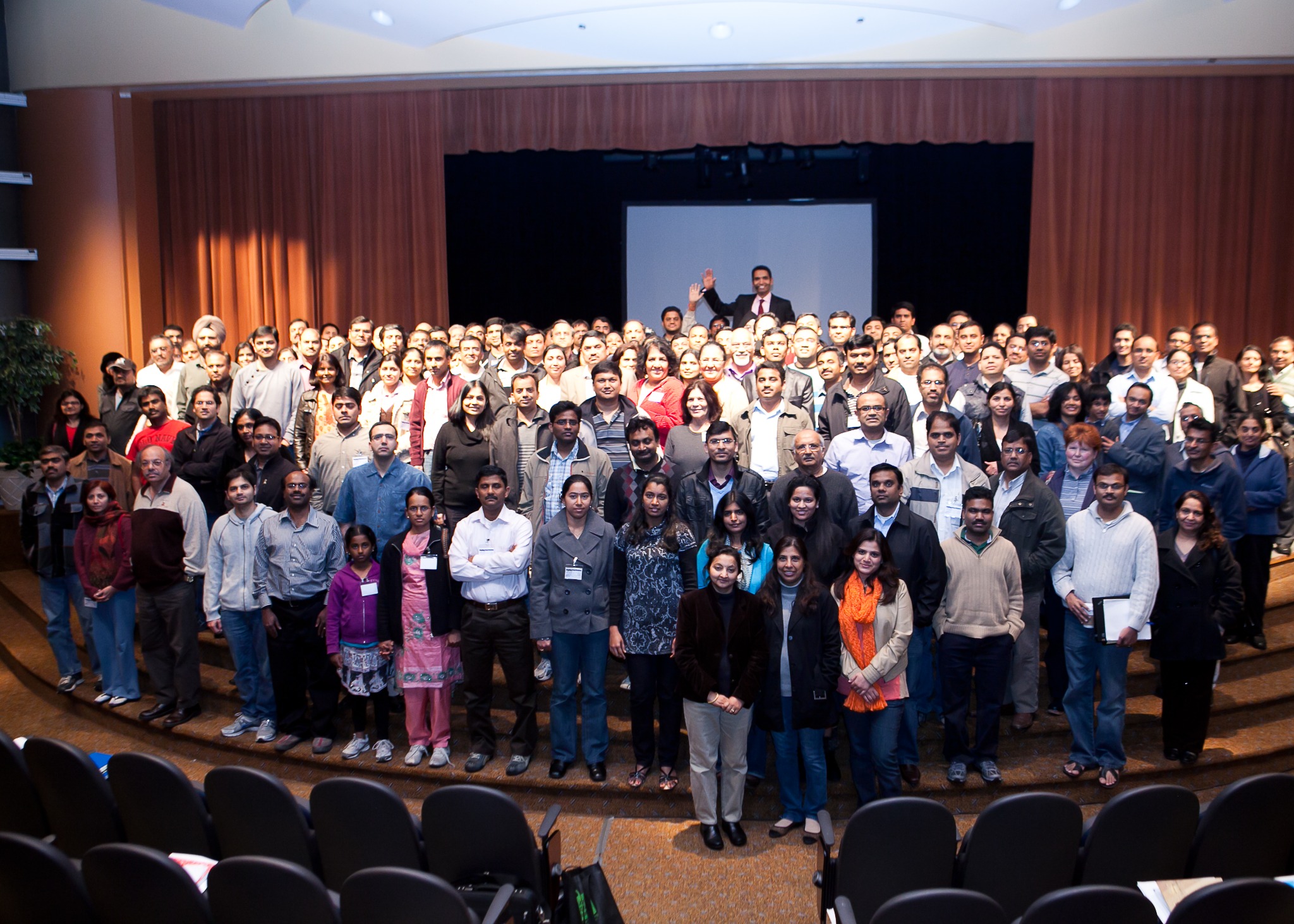
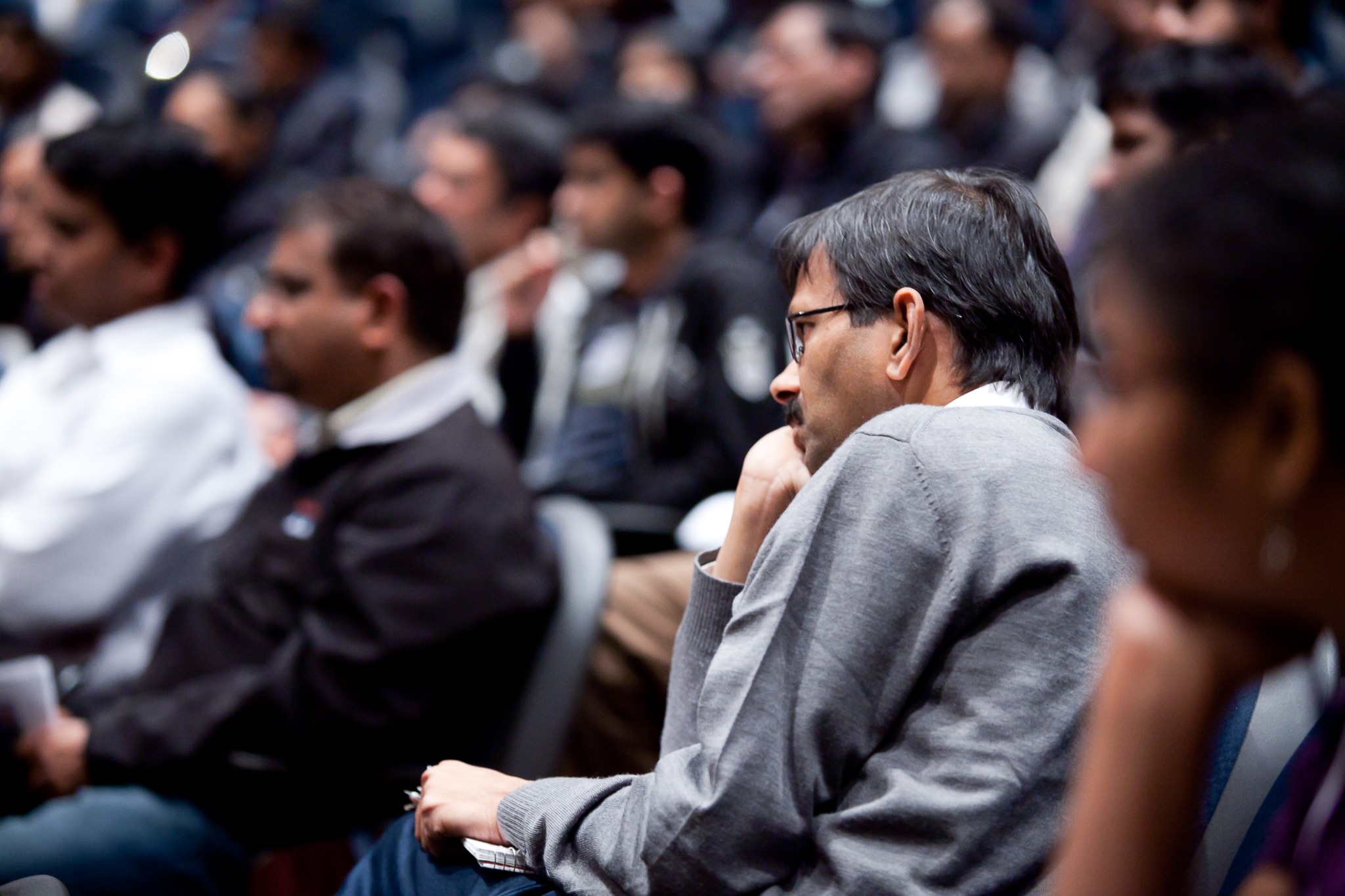
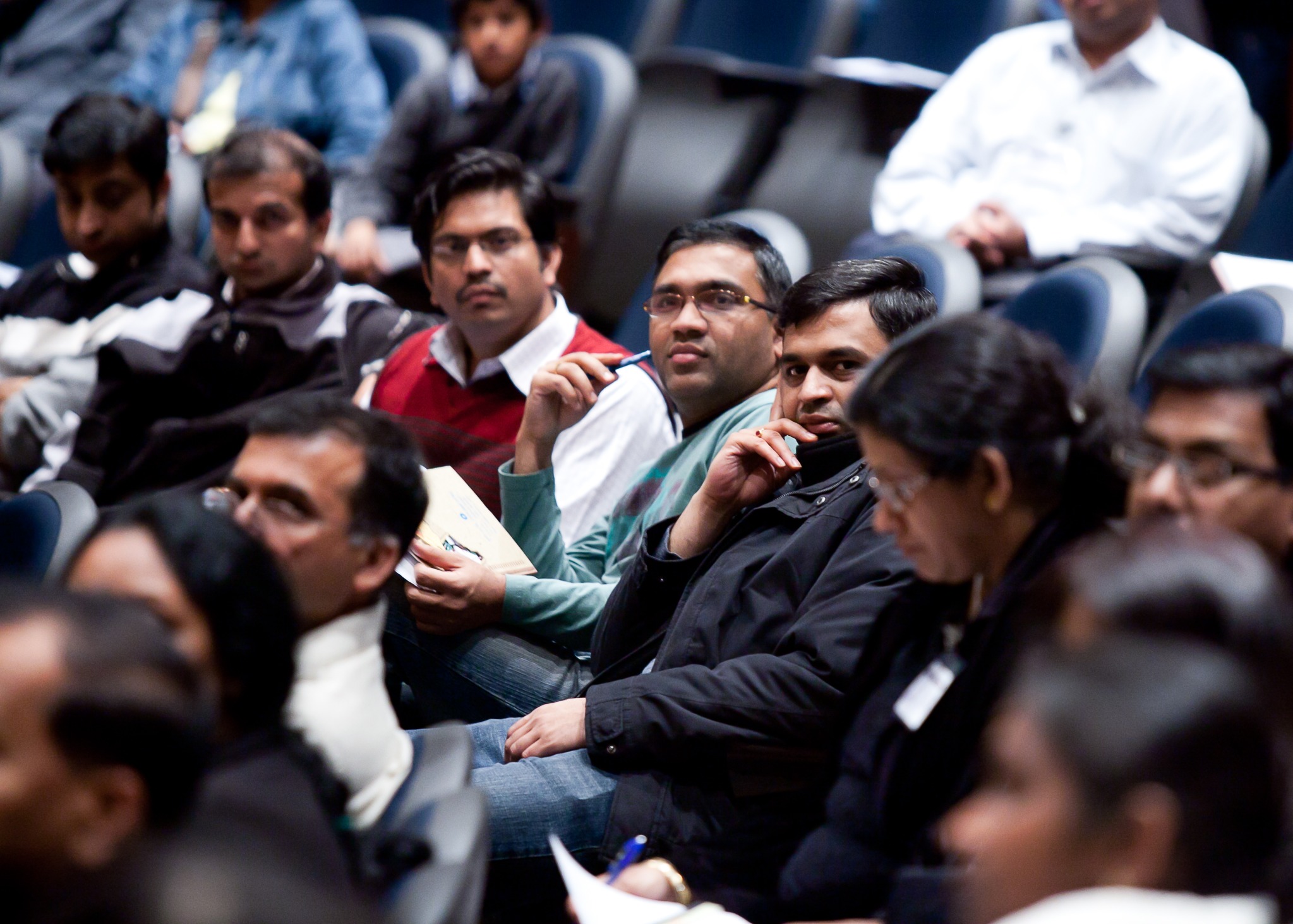
After some sessions, people do not leave when the program ends. They stay. They line up. They ask questions. They tell Srini what landed and what they are now thinking about differently.
That response matters because it means the talk did not end at the edge of the stage.
▶ Watch the after-session videoSee why the room did not immediately clear out →These are not clips selected to repeat a single polished quote. They are longer collections so you can hear how different people describe the experience in their own words.
A focused argument, a memorable question and a clear point of view.
Built around what the audience is actually facing, rather than dropping a generic speech into the schedule.
More room for demonstration, participation, application and live work.
For deeper learning where participants have time to test ideas rather than merely hear them.
Who will be in the room? What are they dealing with? What has already been said to them a hundred times? And what would make this conversation worth their attention? Those are the questions Srini starts with.
Start a speaking conversation →